



A significant inventory write-off or write-down can be an indicator of poor inventory management or potential inventory fraud within the organization.5. How do companies decide whether to use the direct write-off method or the allowance method? The choice between the two methods depends on factors such as the size and frequency of write-offs, the nature of the inventory being held, and accounting policy. An inventory write-off reduces both gross profits and retained earnings by reducing the cost of goods sold (COGS) and the carrying amount of inventory on the balance sheet, respectively.
Writing Off Bad Debt Using the Allowance Method
And the revenue is also incorrect for the time period when the bad debt was expensed. A significant disadvantage of the Allowance Method is the complexity involved in What is bookkeeping estimating bad debts. Companies must use historical data, industry trends, and judgment to make accurate estimates. This process can be time-consuming and requires a thorough understanding of the company’s credit policies and customer payment behaviors. The choice between these methods depends on various factors, including the size and nature of the business, industry practices, and regulatory requirements.
Evaluating the Impact of Economic Conditions on Credit Risk
Additionally, if you have little experience with bad debt, any estimates you make may end up very inaccurate. If your business does not regularly deal with bad debt, the direct write-off method might be better suited for you than the allowance method. With the allowance method, since you have already planned for a portion of your Accounts Receivables to turn into bad debt, you have a more realistic view of how your business is doing. Your business would report the full amount of what your customers owe you when you make a sale or complete a service. But if your customer doesn’t pay you, then the amount reflected in your Accounts Receivables for that period would be too high. The allowance method, while following the GAAP, is based on an estimate at the end of a financial year.

Direct Write-Off Method: The Simple Guide Your Accountant Hates

Unlike the allowance method, the direct write-off method immediately recognizes the loss. This method is generally acceptable for small businesses that don’t require strict adherence to GAAP (Generally Accepted Accounting Principles), or those advised by their CPA to use it. It simplifies bookkeeping, but may not accurately reflect a company’s financial health as precisely as other methods. The method does not involve a reduction in the amount of recorded sales, direct write off method only the increase of the bad debt expense. For example, a business records a sale on credit of $10,000, and records it with a debit to the accounts receivable account and a credit to the sales account.
By estimating the uncollectible accounts and creating an allowance, businesses can match the bad debt expense with the related sales revenue in the same accounting period. This approach adheres to the matching principle, which states that expenses should be recognized in the same period as the revenue they help generate. The direct write-off method, while straightforward in its approach to handling bad debts, presents a unique set of challenges when it comes to financial analysis and the interpretation of financial ratios. This method, which involves expensing accounts deemed uncollectible directly against income, can lead to significant distortions in financial reporting. For example, consider a company that extends $1,000,000 in credit to its customers in a given year.
Active Clients Trust Us With Their Accounting.
- On one hand, it offers a straightforward approach to dealing with bad debts – those unfortunate yet inevitable instances when customers fail to fulfill their payment obligations.
- In this blog, we’ll explain what the method is, how it works, and whether it’s right for your business.
- By initially creating a reserve and then adjusting it for specific bad debts and recoveries, ABC Inc. ensures a more accurate reflection of its financial position.
- HighRadius helps accounting and finance teams simplify and accelerate the financial close and reporting process.
- If the customer’s balance is written off as uncollectible, there is nothing to apply the payment against.
- This unfortunate reality has prompted business owners to adopt practical methods for handling unpaid debts.
However, this method might not be suitable for all circumstances since it can result in distorted gross margins when large write-offs occur. Direct write-offs are generally suitable for smaller inventory write-offs, whereas larger ones may require more nuanced accounting treatment using the allowance method. Furthermore, the allowance method requires businesses to maintain a separate account for the allowance for doubtful accounts. This account needs to be regularly adjusted, which adds complexity to the accounting process. Additionally, the allowance method may result in a delay in recognizing bad debts since the estimation process is not immediate. Publicly traded companies are obligated to follow GAAP or IFRS, which endorse the allowance method.
- But, sometimes the amounts due cannot be collected and are called bad debts.
- Allowance for Doubtful Accounts is a contra-asset linked to Accounts Receivable.
- In some cases, the cost of pursuing the debt might outpace the amount owed.
- While the Direct Write-Off Method is simple and direct, its delayed recognition of bad debt and non-compliance with GAAP make it less desirable for accurate financial reporting.
- The bad debt expense is only recorded then, which means it’s on a different accounting period altogether than from when the revenue was initially recorded.
Similarities between allowance and direct write-off methods
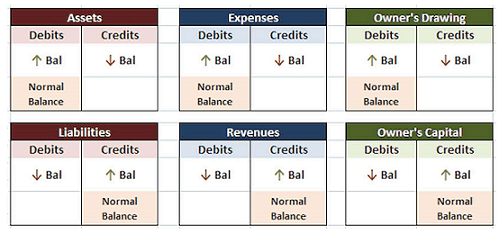
It seems counterintuitive to restore the balance to pay it off, but for recordkeeping purposes, it is necessary to restore the account balance and show the customer properly paid his debt. We must make sure to show that Joe Smith paid the amount he owed, not just the fact that the company received some cash. The allowance method can reverse a write-off if a previously written-off account is later collected. https://owlmarvel.com/what-is-financial-risk-how-to-manage-it-smartly/ In this case, the original write-off entry is reversed to reinstate the receivable, and then the cash collection is recorded.
Delay in Recognition of Bad Debt
However, it involves subjective estimation and adds complexity to the accounting process. On the other hand, the direct write-off method is simpler and allows for the immediate recognition of bad debts. However, it violates the matching principle and may result in a delay in recognizing bad debts. Ultimately, businesses need to carefully consider their specific circumstances and requirements to choose the most suitable method for accounting for bad debts.